Valentine’s Day after divorce can feel unfamiliar at first. Traditions may look different. Schedules may shift. The rhythm of the day may no longer mirror what it once was.
But change does not mean loss of love.
In fact, this holiday offers a quiet opportunity: the chance to build something new with intention.
Reimagining Valentine’s Day after divorce isn’t about recreating the past. It’s about creating traditions that reflect who your family is now.
Letting Go of the “Old Version” of the Holiday
Divorce reshapes many things, including holidays. You may find yourself comparing this Valentine’s Day to earlier ones, remembering how traditions used to unfold. That comparison is natural.
But children do not measure love by tradition. They experience love through presence.
When we release the pressure to replicate what once was, we create room for something more authentic. This might mean a smaller celebration. A quieter evening. Or something entirely different from what your family used to do.
New traditions are not second-best versions of old ones. They are reflections of growth.
Creating Simple, Meaningful Rituals
Children thrive on rituals, even small ones. Especially small ones.
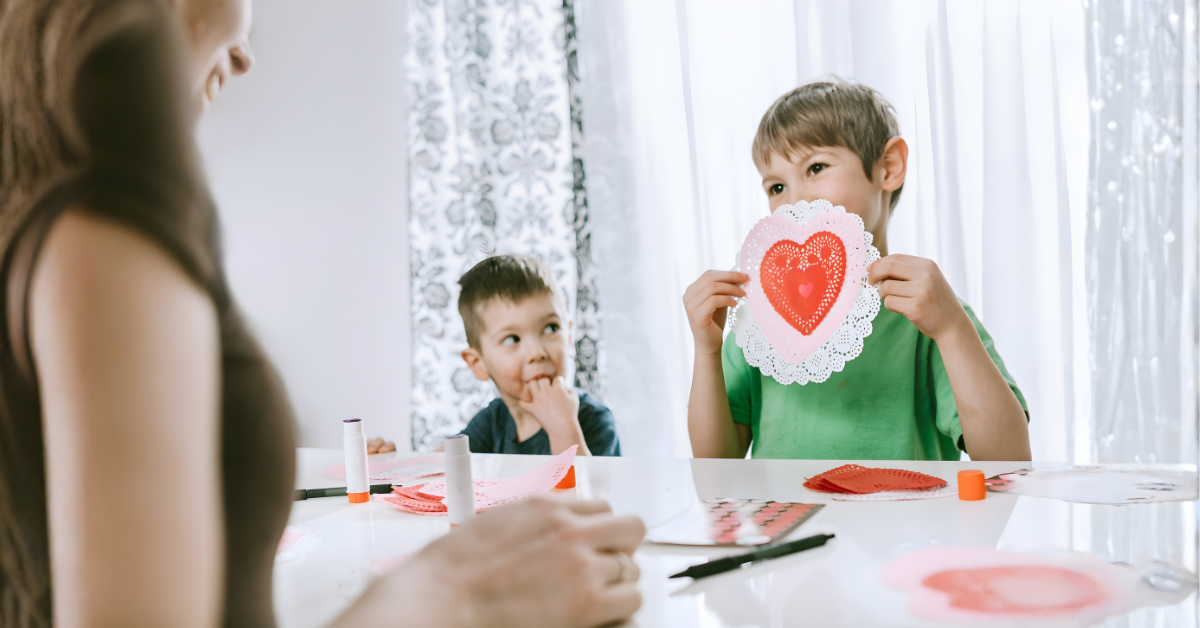
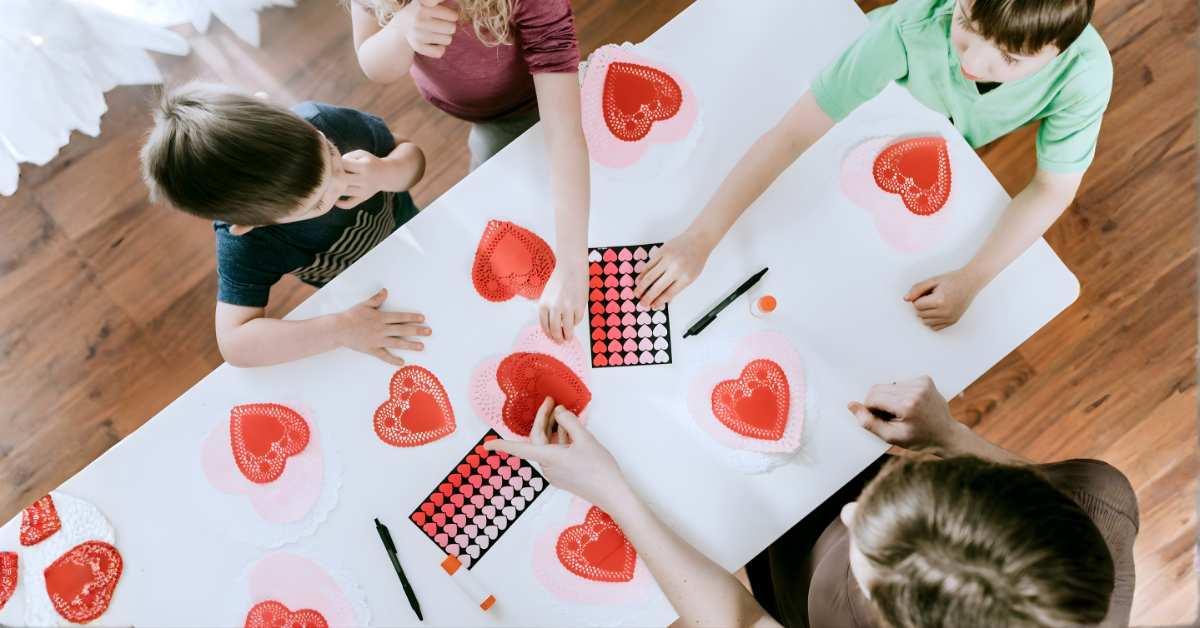
Reimagining Valentine’s Day after divorce might look like writing one sentence of appreciation to each other at dinner. It might mean making heart-shaped pancakes in the morning or leaving a note in a backpack before school.
It does not need to be elaborate.
The power of a tradition lies in repetition and intention, not scale. When children know what to expect each year, they feel grounded — even in a family that has changed shape.
Giving Children Permission to Love in Both Homes
One of the quiet tensions children can carry after divorce is the feeling that celebrating in one home somehow diminishes the other.
Valentine’s Day offers a chance to model emotional generosity.
You might say, “I hope you have a wonderful time celebrating at Dad’s,” or “I’m excited to hear what you and Mom do.” That simple permission releases loyalty binds and reinforces security.
Love is not divided between homes. It expands.
If you are navigating new relationship dynamics alongside co-parenting, maintaining that tone of emotional steadiness matters. Protecting your child from adult tension creates the safety that makes new traditions possible.
Expanding the Meaning of Valentine’s Day After Divorce
Valentine’s Day does not need to center on romantic partnership. It can become a celebration of friendship, kindness, resilience, and family connection.
Some families choose to use the day as a reminder to perform small acts of service for one another. Others focus on gratitude. Some write notes of appreciation not only to each other, but to teachers, grandparents, or friends.
Reimagining Valentine’s Day after divorce is an invitation to redefine what love looks like in your home.
Children who experience love as steady, adaptable, and generous learn that connection is not dependent on circumstances.
When It’s Not Your Parenting Time
If Valentine’s Day falls on a day your children are with your co-parent, you can still create meaning. Consider celebrating the weekend before or after. Children rarely mind an extra day of celebration.
You might also send a small note, a text, or a card to remind them they are loved. It does not need to compete with what happens in the other home.
The goal is continuity, not comparison.
Closing Thoughts
New traditions, by definition, take time to feel natural. The first year may feel different. The second may feel more comfortable. By the third, it may feel entirely your own.
Valentine’s Day after divorce is not about recreating what once was. It is about building something steady and intentional in the present.
Families evolve. Love does not disappear. It adapts.
When children see that love can remain strong, even when circumstances change, they learn resilience that lasts far beyond a single holiday.